Nicotinamide Riboside (NR) Dosage and Comparison with NMN for Adults Over 50
Nicotinamide riboside, often abbreviated as NR, has attracted attention as a dietary supplement that may support cellular energy metabolism and healthy aging. Interest in NR is driven by its role as a precursor to nicotinamide adenine dinucleotide, commonly known as NAD, which is central to numerous biochemical processes, including mitochondrial function, DNA repair, and cellular signaling. For people over fifty, maintaining metabolic resilience and protecting cellular function are frequently cited priorities, and therefore interest in NAD precursors has risen in both research and consumer markets. In this article I will present an evidence-based overview of NR with a focus on practical dosage considerations, safety, and a clear comparison with another popular precursor, nicotinamide mononucleotide or NMN. The goal is to provide balanced information suitable for non-experts so that readers can discuss NR thoughtfully with their healthcare providers. Where appropriate I will reference reputable institutions and broadly accepted scientific principles rather than relying on single studies or unverified claims.
The science around NAD biology has advanced substantially over the past two decades, with contributions from multiple research groups and institutions, including universities and funding agencies such as the National Institutes of Health. While laboratory and clinical research have explored several NAD precursors, NR and NMN have emerged as two of the most commonly discussed options for supplementation. Importantly, evidence from model organisms offers mechanistic insight but does not automatically translate into predictable outcomes in older adults, making careful interpretation necessary. Responsible guidance therefore emphasises what is known about safety, plausible mechanisms, and commonly studied dose ranges, while acknowledging remaining uncertainties. Readers should understand that supplements interact with individual health status, medications, and other lifestyle factors, and that healthcare professionals remain the appropriate source for personalised advice. This introduction sets the stage for a deeper look at what NR is, how it works, how much people commonly take, and how NR compares with NMN.
The remainder of this article is organised to support practical decision-making for adults over fifty who are evaluating NR. First I provide background on NAD metabolism to clarify how precursors like NR and NMN fit into cellular biochemistry. Next I describe likely mechanisms by which NR could influence health and function, followed by a detailed discussion of dosage considerations and safety signals from human research and authoritative health organisations. A dedicated section compares NR and NMN in terms of chemistry, cellular uptake, and the current state of human data. Finally, I offer pragmatic recommendations for adults over fifty considering ND precursors in the context of lifestyle measures and medical oversight. Throughout this piece I emphasise clarity and evidence-based reasoning so readers can weigh benefits, risks, costs, and alternatives in a realistic manner.
Background on NAD and Nicotinamide Riboside
NAD is a fundamental coenzyme found in every living cell and is essential for redox reactions that underlie energy production, notably in mitochondria. Beyond its classical role in metabolism, NAD serves as a substrate for enzymes involved in DNA repair, epigenetic regulation, and signalling pathways that modulate inflammation and stress responses. Levels of NAD in tissues and cells can decline with age and in some disease states, which has stimulated interest in strategies to support NAD availability. Nicotinamide riboside is one of several nutritional precursors that can be converted into NAD through specific enzymatic pathways, and because it sits upstream of NAD formation, it is sometimes described as an NAD booster. Understanding these pathways clarifies why researchers consider precursors rather than direct NAD administration, since direct NAD is not efficiently taken up by many cell types when provided orally.
NR is a naturally occurring form of vitamin B3 found in trace amounts in milk and other foods, and it is chemically distinct from other B3 forms such as nicotinic acid and nicotinamide. When taken as a supplement, NR is metabolised by cells through kinase-dependent steps that lead to NAD synthesis, and this pathway differs from how other B3 forms contribute to NAD pools. The distinction in metabolic routes has practical implications because each precursor may have different tolerability profiles and effects on metabolism. For instance, nicotinic acid can cause flushing at doses that influence NAD, so alternative precursors have been explored to minimise such side effects while still supporting NAD-dependent processes. The biochemical diversity among precursors is therefore relevant to how a supplement might be experienced by an older adult taking concurrent medicines and managing other health conditions.
From a translational perspective, preclinical studies in rodents and cell systems have shown that NR can increase tissue NAD levels and influence pathways involved in mitochondrial health and stress resilience. Those mechanistic findings provide a rationale for exploring NR in human trials, but they do not guarantee similar magnitudes of effect in people or specific clinical benefits. Institutions such as the National Institutes of Health fund research to better define the role of NAD in age-related physiology, and clinical studies are ongoing to evaluate efficacy and safety endpoints. For individuals over fifty, the appeal of NR stems from the intersection of plausible biological benefit and a generally acceptable safety profile in short-term human studies, though long-term outcomes and ideal dosing strategies remain areas of active investigation.
Mechanisms of Action: How NR Enters NAD Metabolism
Nicotinamide riboside contributes to NAD pools through a pathway that involves phosphorylation to nicotinamide mononucleotide and subsequent conversion to NAD. The enzyme family known as nicotinamide riboside kinases facilitates the first step, which distinguishes NR metabolism from routes used by other vitamin B3 forms. Because NR enters cells and is processed intracellularly, it can support NAD-dependent enzyme families, including sirtuins and PARPs, which are involved in processes such as mitochondrial biogenesis and DNA damage responses. These downstream effects have stimulated interest in NR as a way to modulate cellular stress resistance and metabolic flexibility, which are areas of concern for middle-aged and older adults. It is important to recognise that the magnitude of NAD increase and the functional consequences vary by tissue type, species studied, and the baseline metabolic state of the individual.
There is ongoing scientific discussion regarding the relative efficiency of different precursors in raising NAD levels in specific tissues, and this topic remains unsettled for humans. Research methods such as tissue biopsies, metabolomic profiling, and stable isotope tracing have been used in research settings to map precursor conversion, but such techniques are not part of routine clinical care. The complexity of NAD metabolism means that systemic measurements do not capture tissue-specific dynamics fully, and the effect of NR supplementation on clinically relevant outcomes depends on how much NAD is increased in target tissues such as skeletal muscle, brain, or immune cells. This mechanistic uncertainty is why current guidance often focuses on safety and realistic expectations rather than making strong claims about disease prevention or reversal.
Finally, metabolism of NR intersects with lifestyle factors that influence NAD demand and turnover, including physical activity, dietary composition, sleep quality, and inflammatory status. For example, exercise stimulates mitochondrial adaptations and alters NAD utilisation, which could theoretically interact with how much benefit a person derives from an NAD precursor. Similarly, chronic inflammatory conditions that increase NAD-consuming enzyme activity may change the dose-response relationship to supplementation. For adults over fifty considering NR, thinking of supplementation as one component of an overall strategy that includes lifestyle optimisation is more likely to yield meaningful benefits than relying on a supplement alone.
Dosage Considerations for NR
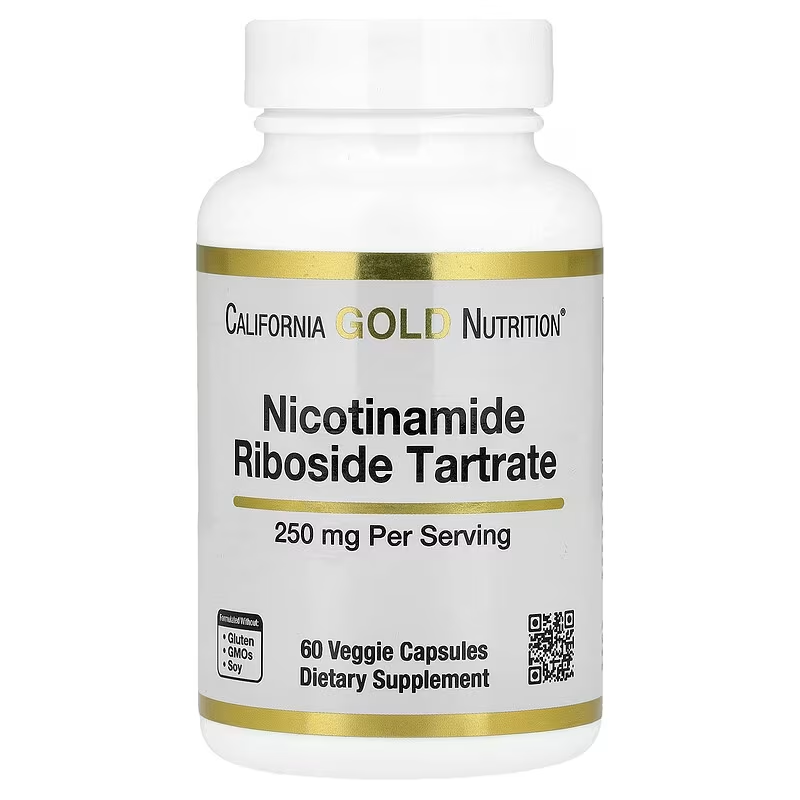
Choosing a starting dose for NR requires consideration of the available evidence, product labelling, and individual health circumstances, including medications and comorbidities. Commercial NR supplements are commonly sold in capsule forms with doses often in the range of 100 to 300 milligrams per capsule, which reflects manufacturing practices as well as dosages most frequently used in human studies to date. Some clinical research and exploratory trials have investigated higher daily doses in the short term to examine tolerability and pharmacokinetics, and those investigations help delineate upper ranges that have been tested. However, long-term safety data at higher doses remain limited, so many clinicians and researchers recommend starting at a commonly available lower dose and evaluating tolerance and perceived effects over weeks to months while under medical supervision.
For adults over fifty who are generally healthy, a conservative approach is reasonable: begin with a lower daily dose consistent with product labelling and with doses commonly used in human research, then reassess with a clinician if there is interest in adjusting the dose. Titration allows monitoring for side effects, interactions with prescription medications, and subtle changes in sleep, appetite, or gastrointestinal comfort that could be relevant. For individuals with chronic conditions or who take medications that may interact with NAD metabolism or liver function, consultation with a primary care provider or a specialist is particularly important before starting supplementation. Additionally, because supplements are not regulated like prescription drugs, choosing products from reputable manufacturers with good quality control and third-party testing can help reduce variability in active ingredient content.
Timing and formulation may influence how NR is used in daily life but currently do not have a definitive evidence base to favour a single regimen for all older adults. Some people prefer taking NR with food to reduce potential gastrointestinal discomfort, while others take it at specific times, such as morning or evening, based on personal experience with sleep or energy. In clinical studies, NR has been administered once or twice daily depending on total daily dose, and both approaches appear feasible for adherence. Given the current state of evidence, practical considerations such as cost, ease of adherence, and tolerance should guide individualised dosing decisions rather than an expectation of dramatic effects guaranteed by any particular schedule.
Safety, Interactions, and Side Effects
Safety is a primary consideration for adults over fifty who may be managing multiple health conditions and medications. Short-term human studies and post-marketing experience suggest that NR is generally well tolerated in many individuals, with most reported adverse effects being mild and including gastrointestinal symptoms such as nausea or abdominal discomfort. As with any supplement, rare or idiosyncratic reactions can occur, and long-term safety data remain limited relative to medications that undergo extensive regulatory review. Health authorities such as national public health agencies and institutions like the U S Food and Drug Administration provide guidance on the regulation of dietary supplements and encourage reporting of adverse events, which supports ongoing surveillance of product safety in the population.
Potential interactions between NR and prescription medications are an important practical concern even though definitive interaction profiles are not fully established. Because NAD participates in liver metabolism and cellular signalling pathways, theoretical interactions with agents that affect those systems could exist, and clinicians generally advise caution when initiating any supplement with overlapping biochemical pathways. For example, people on medications that influence liver enzymes, anticoagulants, or immunomodulatory therapies should discuss NR with their prescriber to evaluate risks and monitoring needs. Additionally, individuals with active cancer or those undergoing chemotherapy should approach NAD precursors conservatively and seek oncology input, since cellular metabolism can influence cancer biology and treatment responses.
Special considerations apply to specific populations such as those with liver or kidney impairment, pregnant or breastfeeding people, and individuals with complex immune disorders. Because clinical research has not established clear benefit-risk profiles for these groups, many professional recommendations emphasise avoiding nonessential supplementation or deferring to specialist guidance. The World Health Organization, national health services, and major medical centers stress that supplements should complement, not replace, evidence-based medical care and that clinician oversight is key when combining supplements with therapeutic regimens. In short, safety assessment for NR should be individualised, precautionary, and coordinated with trusted healthcare professionals.
Comparison with NMN: Chemistry and Biological Effects
Nicotinamide mononucleotide, or NMN, is another NAD precursor that has become popular in research and consumer markets and is often compared with NR. Chemically, NMN is one step closer to NAD in the biosynthetic pathway because it is a mononucleotide, whereas NR is a nucleoside that is converted to NMN by enzymatic phosphorylation inside cells. This chemical distinction has prompted scientific questions about whether NMN or NR provides more efficient or direct NAD replenishment in specific tissues. Experimental data from cell and animal studies have demonstrated that both precursors can augment NAD levels, but their relative effectiveness, especially in humans, is still being characterised and may depend on tissue-specific transport and enzymatic expression.
One practical difference between NR and NMN lies in how they are absorbed and transported within the body. NR is small and can cross cell membranes where kinases convert it to NMN and then to NAD, while NMN may require conversion or transport processes that vary by cell type and species. The human data comparing these pathways are still emerging, and some investigators caution that mechanisms observed in mice do not always mirror human physiology. Because of these uncertainties, proponents of either precursor may point to different mechanistic advantages, but a consensus has not been established on which compound is categorically superior for elevating NAD in human tissues most relevant to aging.
From a safety and tolerability standpoint, both NR and NMN have been generally well tolerated in short-term human studies, and reported side effect profiles are similar with gastrointestinal complaints among the most common mild adverse events. Cost and product availability also influence consumer choice, as market prices and formulation options vary between NR and NMN products. Given the current state of evidence, many clinicians recommend that older adults focus on validated safety considerations, product quality, and integration with overall health strategies rather than treating one precursor as definitively better than the other. Research comparing the two in well-designed head-to-head trials in humans would be most informative, and such trials remain an important gap in the literature.
Comparison with NMN: Clinical and Practical Perspectives
Clinically, both NR and NMN are being evaluated for a range of potential effects related to metabolic health, cognitive function, and markers of cellular aging, yet definitive evidence of clear clinical benefit for specific age-related conditions in humans is not established. Healthcare institutions that inform the public, such as the National Institutes of Health and major academic medical centres, emphasise that while early human trials are encouraging about tolerability and target engagement, they do not yet provide conclusive proof of broad clinical efficacy for aging or chronic disease prevention. For patients and clinicians, this means that the decision to use NR or NMN should be framed as part of a risk-benefit conversation that accounts for current evidence gaps and individual health priorities. Pragmatically, some people choose to trial supplementation with careful medical oversight, while others prefer to wait for more robust outcome data.
Comparative practicalities also include stability and formulation issues that affect how the supplements are manufactured, stored, and consumed. Differences in how NR and NMN degrade under heat, humidity, or time can influence product choice and price, and responsible consumers look for manufacturers that provide stability data and third-party verification of content. Additionally, dosing frequency and pill burden may be factors for older adults managing multiple medications, and the relative convenience of dosing regimens can sway preferences independent of subtle mechanistic differences. Ultimately, individual priorities such as cost, convenience, perceived tolerability, and clinician input shape real-world decisions between NR and NMN as much as mechanistic arguments.
It is helpful to remember that neither NR nor NMN should be viewed in isolation from broader lifestyle strategies that influence NAD demand and metabolic health. Exercise, adequate protein intake, sleep quality, and management of cardiometabolic risk factors all contribute to maintaining cellular function as people age. In this sense, whether a person selects NR or NMN, coupling supplementation with evidence-based lifestyle measures is likely to provide a stronger foundation for health than relying on supplementation alone. This integrated perspective is particularly relevant for adults over fifty who are seeking sustainable approaches to preserving function and resilience.
Practical Guidance for Adults Over 50 Considering NR
For adults over fifty contemplating NR supplementation, the first practical step is an honest assessment of goals, baseline health status, and willingness to engage in monitoring with a clinician. NR may be of interest for supporting energy metabolism or resilience in the context of aging, but expectations should be modest and rooted in what human data support. Before starting any new supplement, discuss it with your primary care provider or relevant specialist, especially if you take prescription medications, have chronic conditions, or have a complex medical history. A clinician can advise on appropriate starting doses, relevant laboratory monitoring, and red flags that would prompt discontinuation or further evaluation.
Choosing a product involves evaluating manufacturer reputation, third-party testing, and clear labelling of active ingredients. Because the supplement industry is variably regulated across countries, seeking products with independent verification from recognised testing organisations can reduce the risk of variability and contamination. Keep in mind that supplements can add to pill burden and cost, so it is reasonable to consider a time-limited trial with objective goals and follow-up rather than an indefinite, unmonitored regimen. During a trial period, note any changes in energy, sleep, gastrointestinal comfort, or other symptoms, and report these findings to your clinician to guide decisions about continuing, modifying, or stopping the supplement.
Finally, maintain a focus on lifestyle measures that are proven to support healthy aging and mitochondrial function. Regular physical activity, especially resistance and aerobic exercise, supports muscle mass and metabolic health and may synergise with NAD-supporting strategies. Adequate protein intake, attention to cardiovascular risk factors, and good sleep hygiene are also essential elements of a practical plan for adults over fifty. Viewing NR as part of a comprehensive approach rather than a standalone intervention will align expectations with what is most likely to benefit long-term health and function.
Conclusion and Next Steps
Nicotinamide riboside is a promising NAD precursor with a plausible biological rationale for supporting cellular energy metabolism and pathways relevant to healthy aging. For adults over fifty, NR may offer a tolerable supplement option to augment NAD pools, but evidence for clear clinical benefits on aging-related outcomes in humans remains incomplete. The decision to use NR should be individualised, guided by conservative dosing strategies, attention to product quality, and coordination with healthcare professionals who can monitor for interactions and adverse effects. While the biochemical science is compelling, translating that into practice requires measured expectations and integration with established lifestyle interventions.
When considering NR versus NMN, current evidence does not conclusively favour one precursor across all tissues and outcomes in humans. Both compounds have mechanistic plausibility and early tolerability data, and practical factors such as cost, availability, and personal response often determine choice. Clinicians and consumers alike benefit from prioritising quality control, third-party testing, and open communication about goals and monitoring plans. Well-designed head-to-head clinical trials in diverse older adult populations are needed to provide clearer guidance on comparative efficacy and long-term safety.
In summary, NR is a scientifically interesting option for adults over fifty who wish to explore NAD-supporting strategies, but it should be approached as part of a comprehensive health plan that values evidence, safety, and realistic outcomes. Discussing NR with a trusted clinician, selecting reputable products, and emphasising proven lifestyle measures provide a balanced path forward. Ongoing research sponsored by public institutions and academic centres will continue to refine our understanding, and staying informed about new findings will help individuals make better decisions about NR and NMN as more human data become available.